The whole hotel on one system
Most hotels of this size run on four systems that do not talk: a booking sheet, a restaurant till, a housekeeping whiteboard and an accountant reconciling all three at the end of the month. This is the same operation built once, on Odoo, so a drink poured at the bar reaches the guest's bill before they reach the front desk.
Built and running · shown live, not as slidesEight parts of the operation, built as one
Each of these is a working part of the demonstration, not a roadmap item.
Rooms and room status
Floors, room types and amenities, with every room on a board coloured by its current state. Rates and the invoicing product are attached to the room type, so a change is made in one place.
Bookings and the front desk
Reservations with a room grid, guest and occupancy details, and a calendar view. A booking moves draft, confirmed, checked in, checked out — and the room state follows it automatically.
Guest folio and invoicing
Every extra charge lands on the guest's folio as it happens. At check-out the invoice is generated from the room nights and the folio together, then paid through the standard payment flow or an online provider.
Restaurant
A point of sale with the dining floor and its tables, a seeded menu by course, and kitchen tickets raised automatically from every validated order — food lines only, drinks skipped.
Bar
A separate till with its own drinks catalogue, charging to the room like the restaurant does but tagged as bar, so the guest's bill still shows where each charge came from.
Housekeeping
Daily service, check-out cleaning, deep cleaning and maintenance on a drag-and-drop board, planned on a calendar. Checking a guest out raises the cleaning task by itself — nobody has to remember.
Car rental
The hotel's vehicles with categories, daily rates and availability, and rental agreements that refuse overlapping dates. Charges go to the folio for a checked-in guest, or to a standalone invoice for anyone else.
Reporting
Occupancy and revenue analysed down to the booking line in pivot and graph views, plus dated PDF reports for occupancy, revenue, housekeeping, food and beverage, and car rental.
The running system, not a mockup
Captures from the demonstration with a seeded day of trading in it. The guests and the figures are invented; the behaviour is real.
Example dataEvery figure in these screens is example data. The guests, the room rates and the revenue are invented for the demonstration — they are not a price list, and not anyone's results.
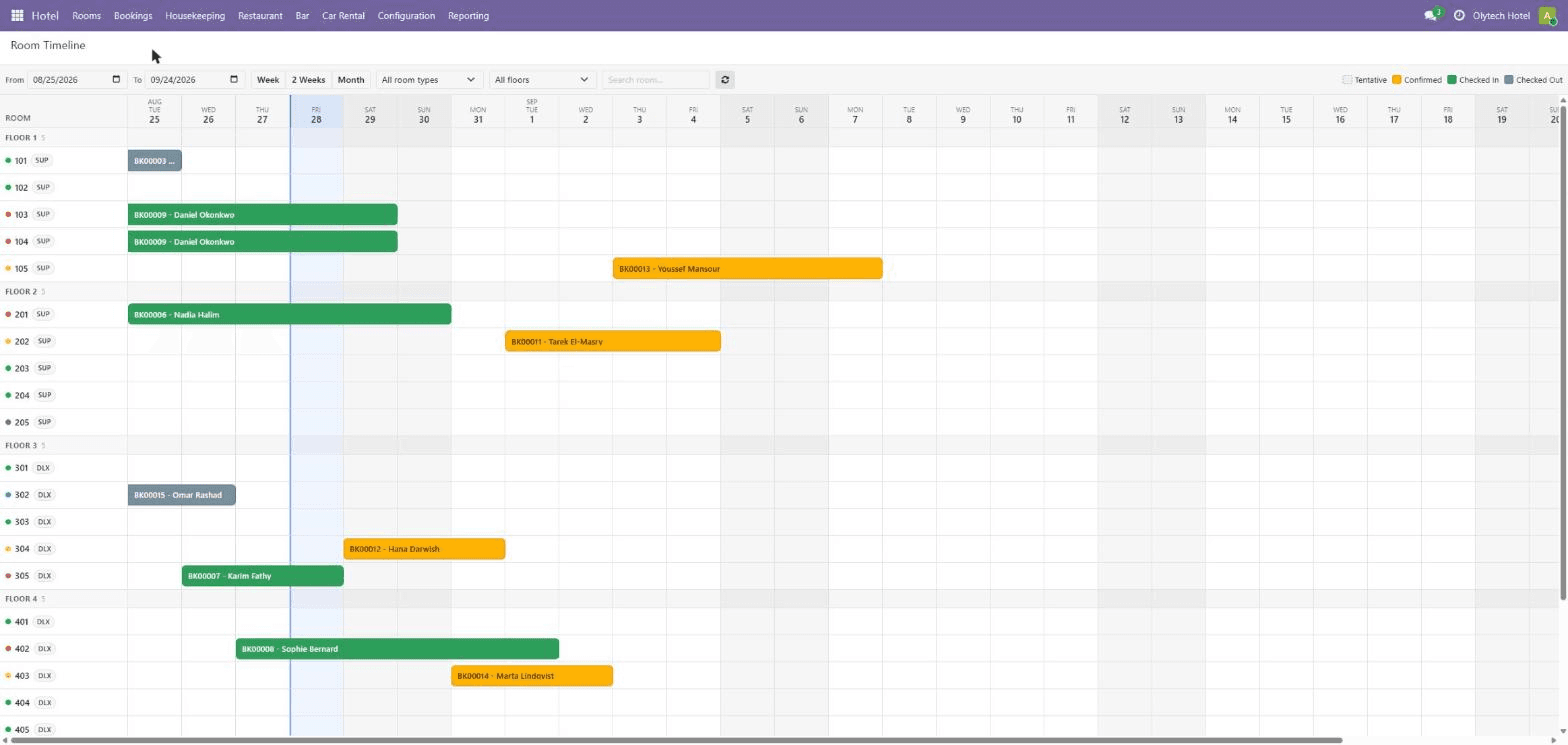
Every room, every night
The timeline is where the front desk actually lives. Rooms down the side grouped by floor, nights across the top, each stay a bar coloured by its state — confirmed, checked in, departed. A free room is a gap you can see.
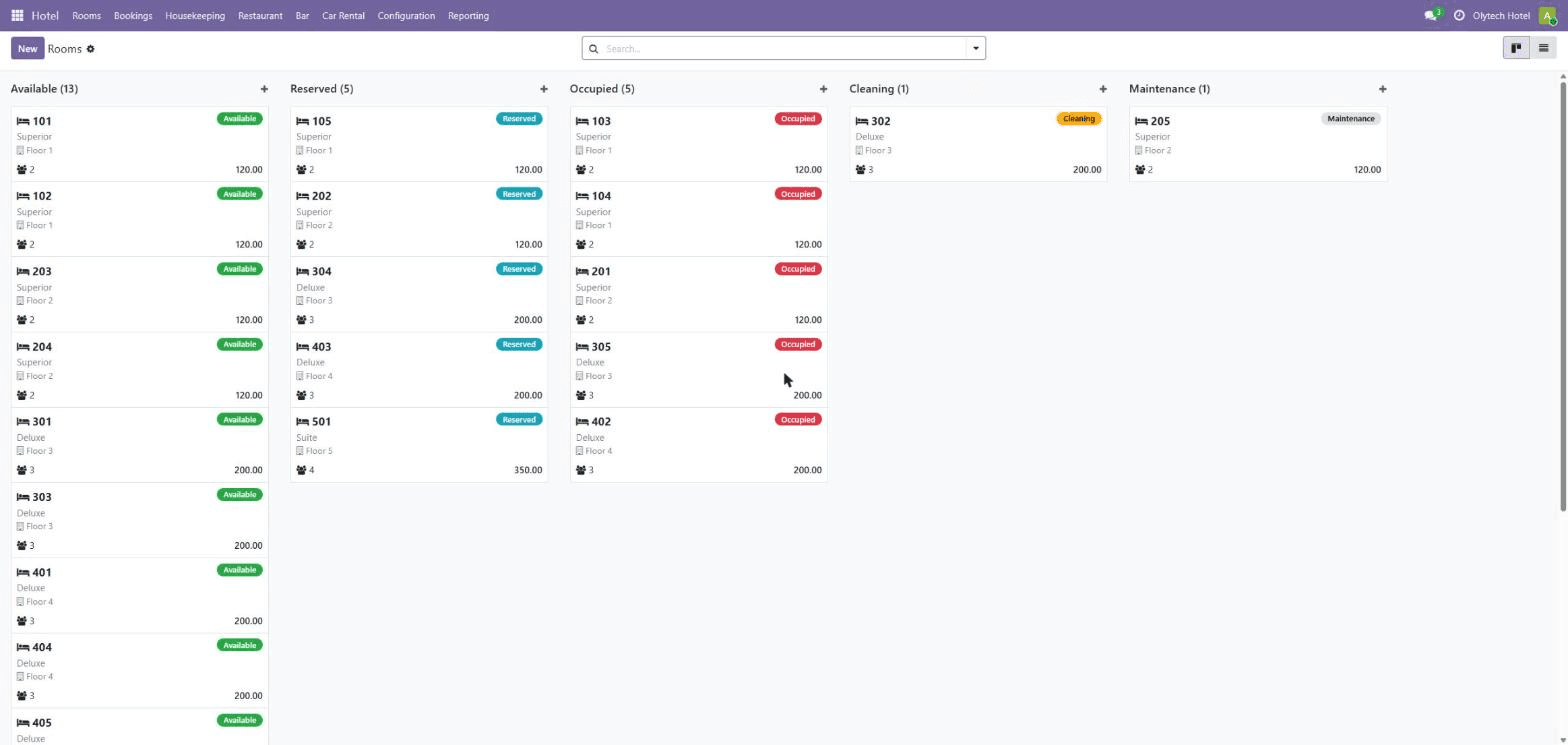
The property, by state
Every room on one board, sorted by what is true right now: available, reserved, occupied, being cleaned, out of service. The states are driven by the bookings, not typed in by hand.
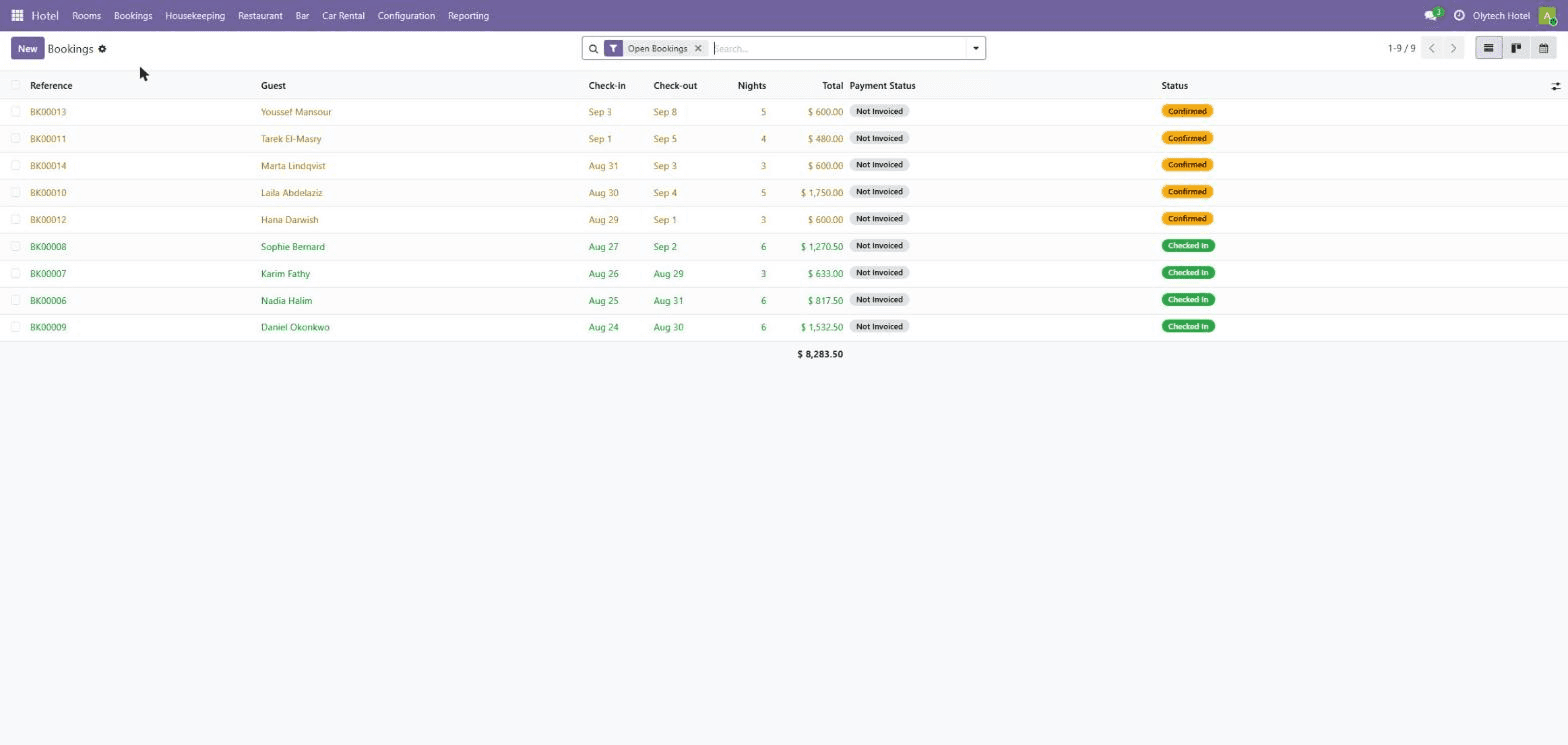
Arrivals and departures
Bookings with nights, totals, payment status and state. The same records that drive the timeline and the room board — there is no second list to keep in step.
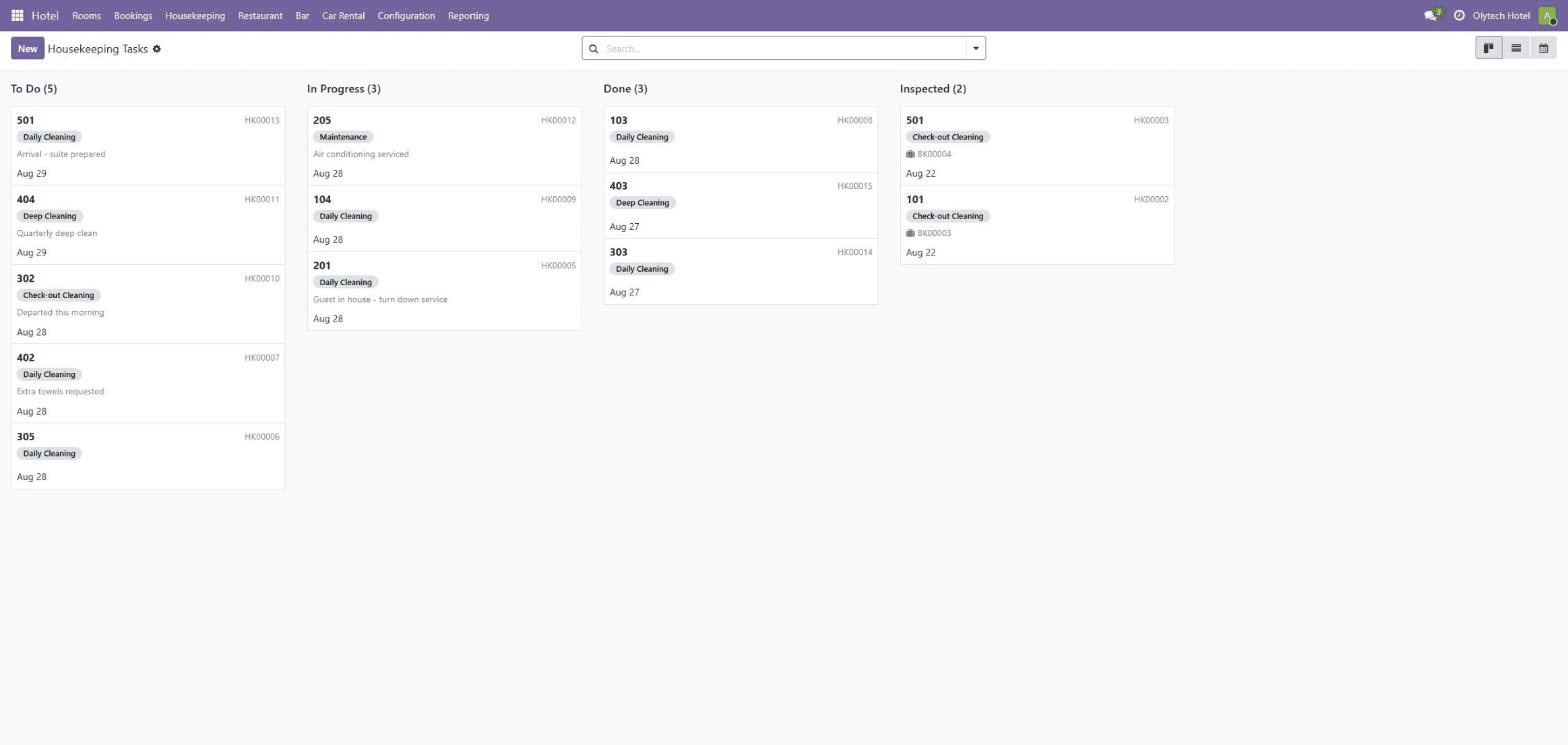
Housekeeping, in four columns
Daily service, check-out cleaning, deep cleaning and maintenance, moved across the board as they are worked. The check-out tasks on the right were raised automatically when the guests left.
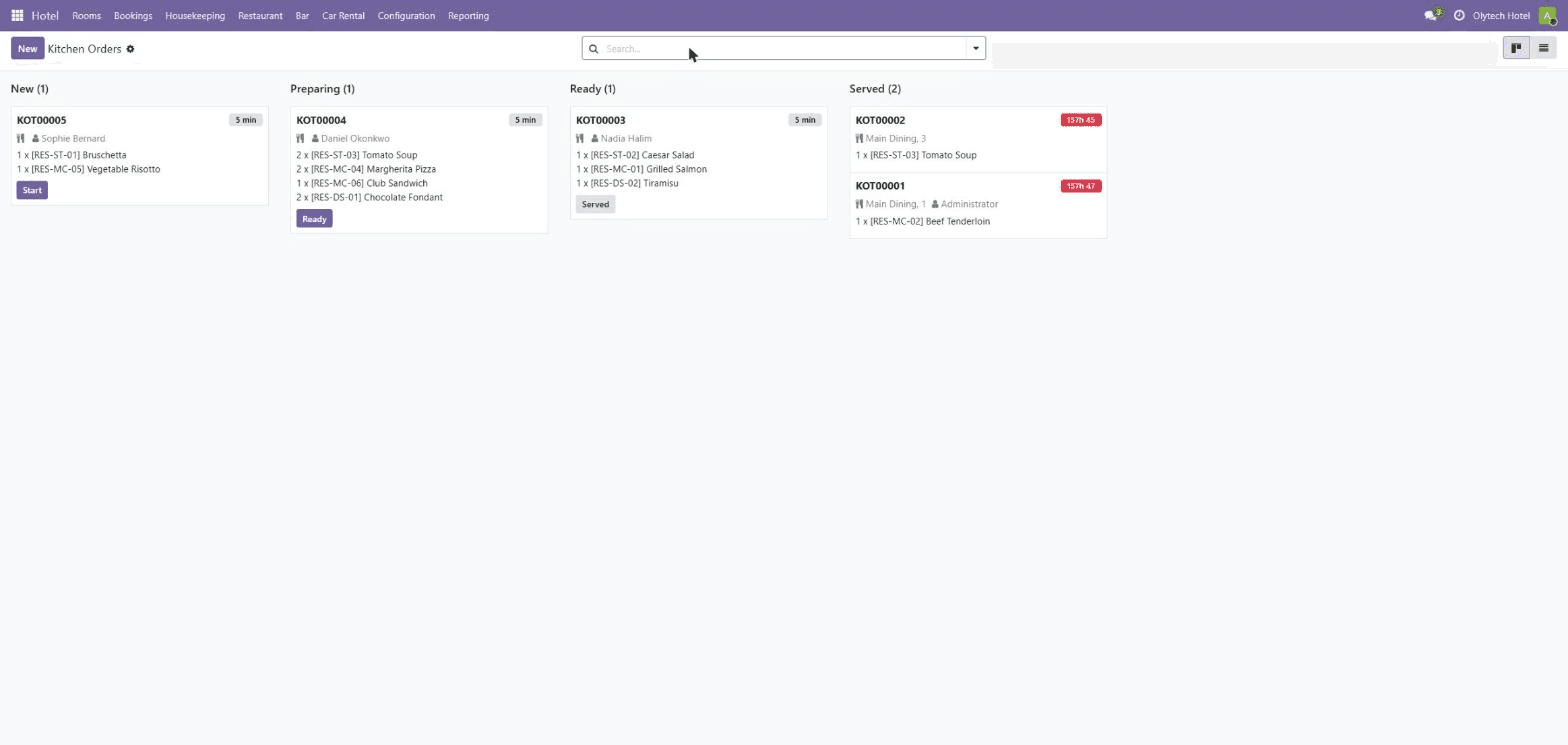
The kitchen board
A ticket per validated restaurant order, food lines only — the drinks are filtered out before the kitchen ever sees them. New, preparing, ready, served.
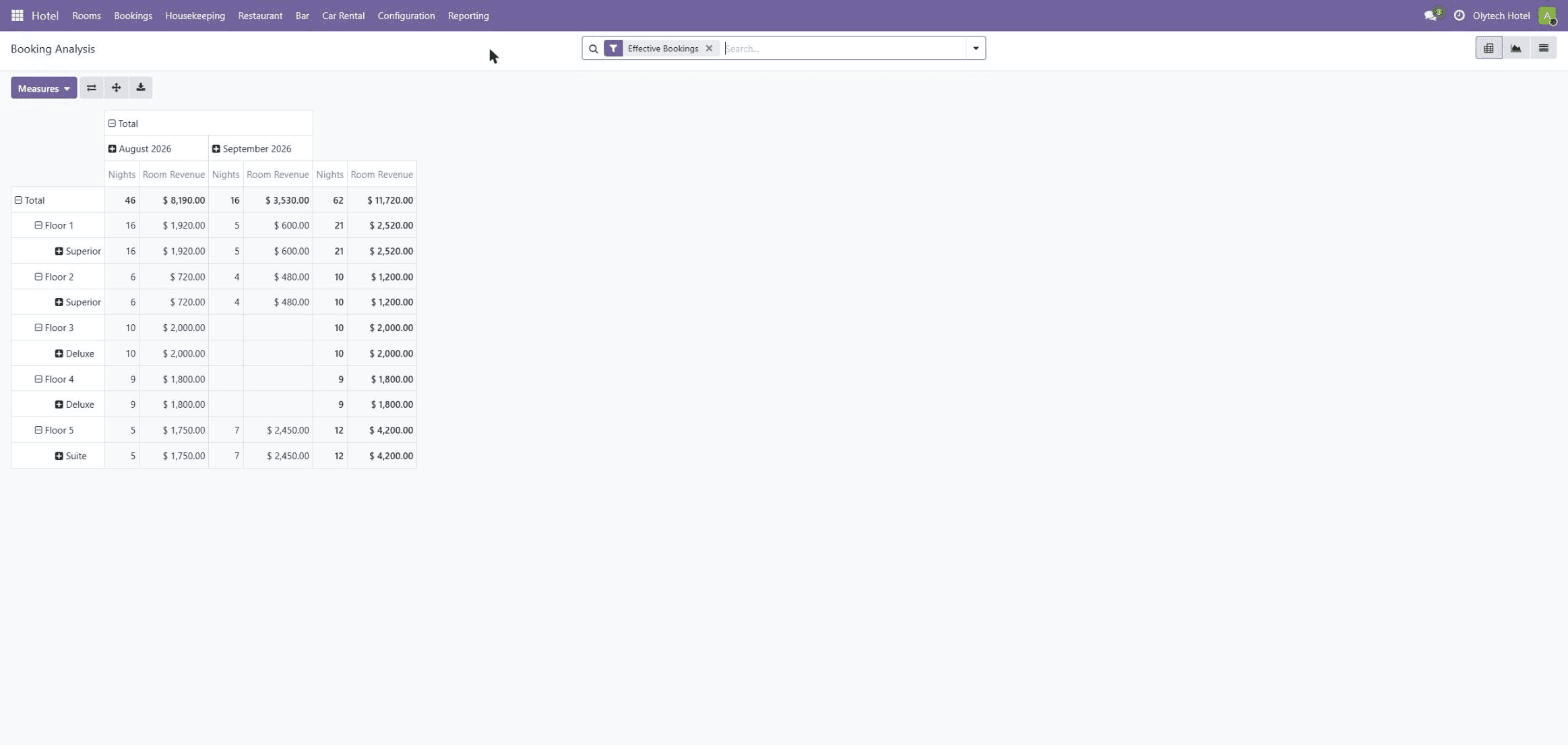
Occupancy and revenue
Nights and room revenue down to the booking line, pivoted by floor, room type and month. The same data as the operation, not a separate report anyone has to assemble. The figures are the demonstration's own invented trading.
Nothing is typed in twice
The argument for one system rather than four is this sequence: each step is already holding what the next one needs.
- 01
The room is held
A reservation is taken against real rooms for real dates. Booking a room that is already taken is refused at the point of entry, not discovered at the door — an overlapping confirmed or checked-in booking will not save.
- 02
The guest checks in
The booking moves to checked in and the room changes state with it. From this moment the guest has an open folio that the rest of the hotel can charge against.
- 03
The hotel charges the room
Dinner, drinks, a rented car — each is rung up where it happens and pushed onto the folio, tagged with where it came from. No chits carried to reception, no end-of-day reconciliation.
- 04
Housekeeping is told, not asked
Rooms are serviced from a board that reflects the booking state. Check-out raises the cleaning task automatically, so the room does not sit dirty because a message was missed.
- 05
The guest checks out and pays
One invoice is built from the room nights and every folio line together, printed as a folio receipt, and settled through Odoo's ordinary payment flow. The room returns to the board ready for the next stay.
Room charge, done properly
Every till in the building shares one payment method: Room Charge. When an order is settled with it, the lines are pushed straight onto the folio of the guest's checked-in booking, tagged with the outlet they came from. The guest signs nothing that has to be found again later, and the bill at check-out reads by source rather than as one unexplained total.
One method, every outlet
The restaurant and the bar use the same room-charge mechanism, so adding a third outlet later is configuration rather than a new integration.
The order stays linked
Each charged order keeps a link back to the booking it was charged to, so any line on the bill can be traced to the order that produced it.
Only a real guest can charge
A charge attaches to the checked-in booking of that customer. There is no way to charge a room that nobody is in.
Example dataEvery figure in these screens is example data. The guests, the room rates and the revenue are invented for the demonstration — they are not a price list, and not anyone's results.
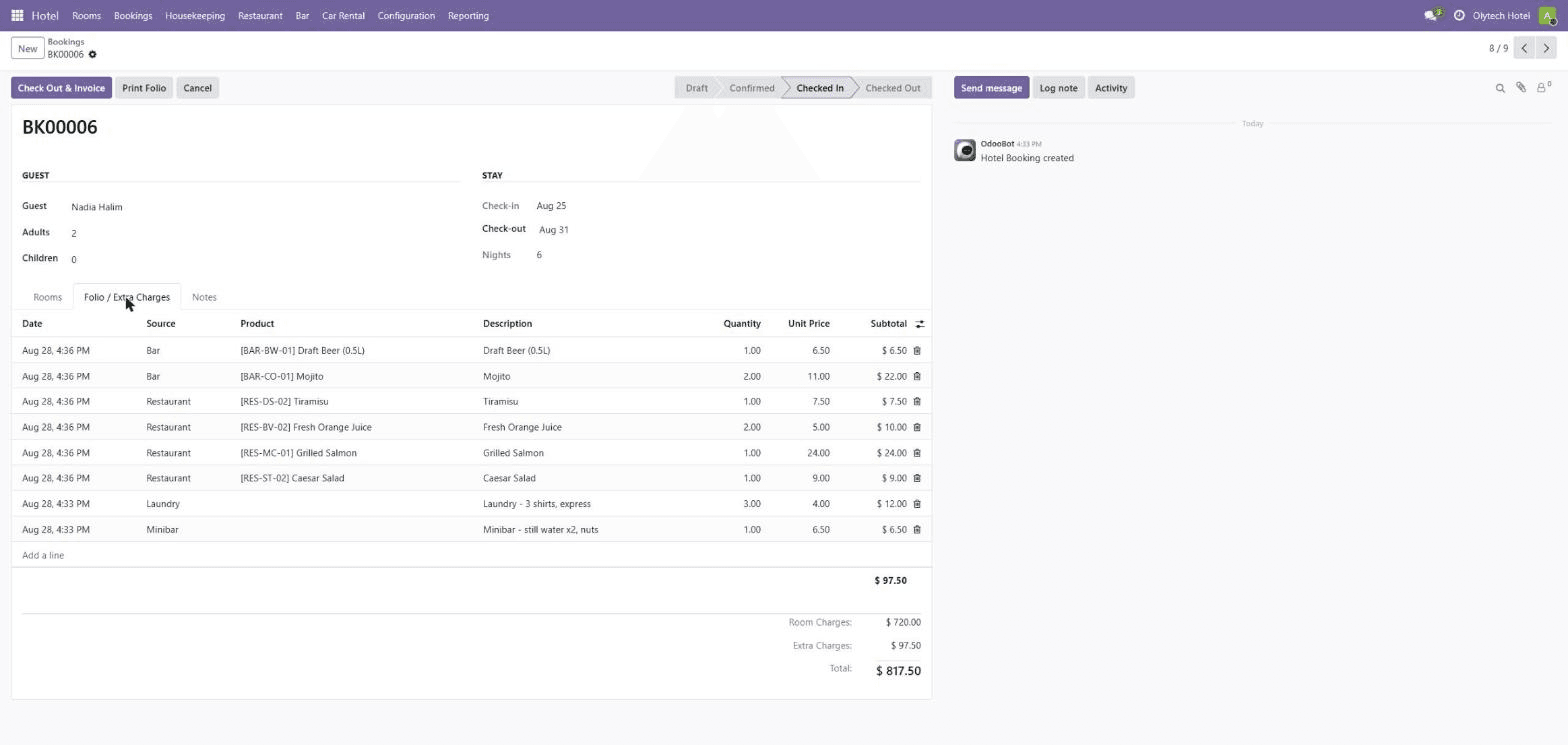
The folio, as it fills
A guest in house with charges arriving from the restaurant, the bar, the minibar and the laundry. Each line carries the outlet it came from.
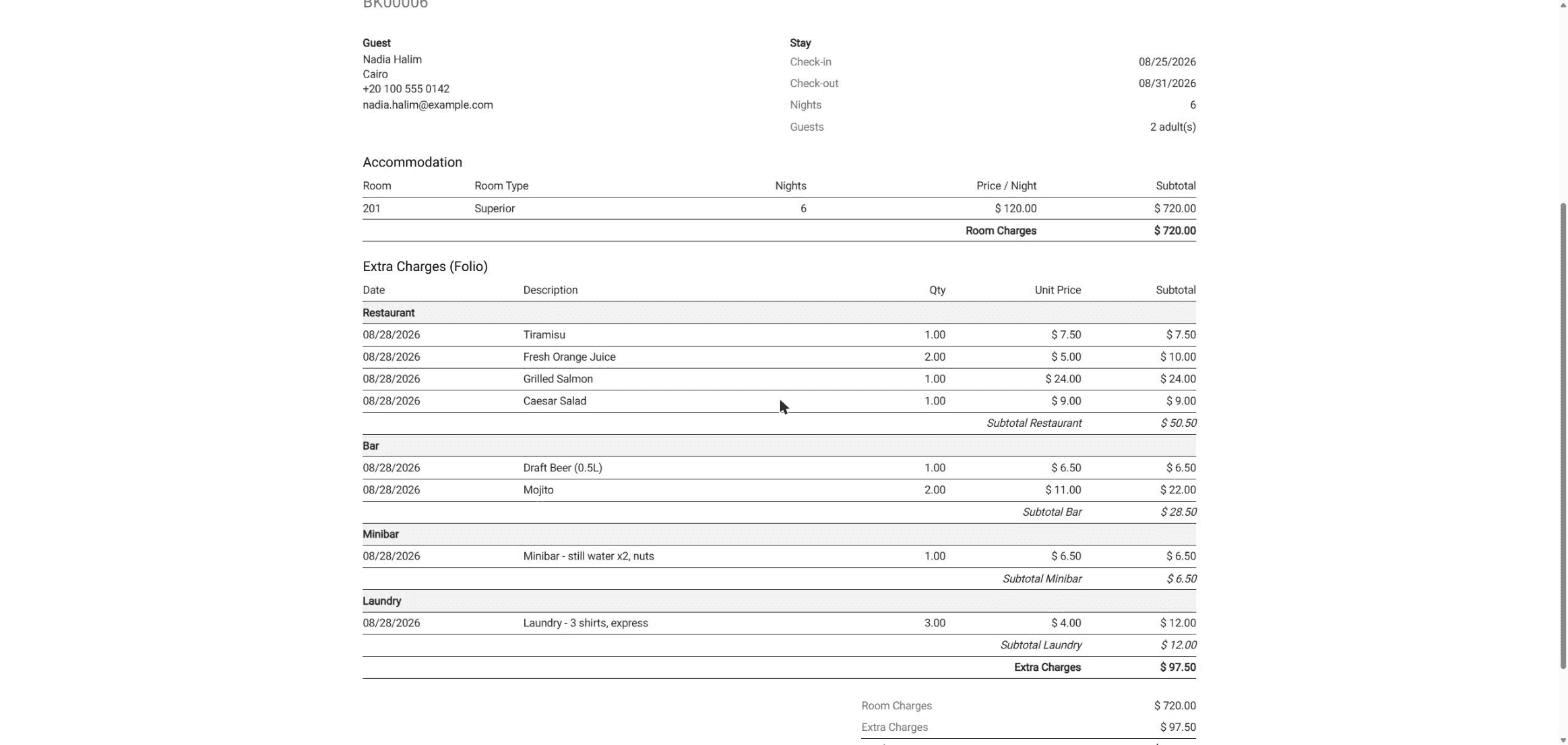
The bill at check-out
The same folio printed: room nights first, then the extras grouped by source with a subtotal each. Nothing to explain at the desk.
What this is, stated plainly
This is a demonstration we built and run ourselves, not a client deployment — the site says so everywhere it appears. It exists so a hotel can see the whole operation working before commissioning anything, and so scoping starts from a real screen instead of a slide.
- Platform
- Odoo 19 Community, with custom modules built for the hotel operation
- Scale in the demonstration
- Five floors of rooms across three room classes
- Points of sale
- Restaurant with a table plan and kitchen board, plus a separate bar
- Status
- Built and running, ready to walk through on request
From this screen to your hotel
The walkthrough is the first step, and it costs you an hour rather than a commitment.
We walk you through it live
A working system on screen, driven end to end — take a booking, charge a drink to it, check the guest out and print the bill. You ask what happens when the real hotel does something awkward, and we show you.
We look at how your hotel actually runs
Rates, seasons, groups, agents, the local paperwork and whatever the front desk currently keeps in a notebook. Nothing is proposed until we understand the operation.
Custom modules are built to order
The demonstration is the starting point, not the ceiling. What your hotel needs beyond it is scoped in writing and built on the same basis, and every engagement is scoped individually.
See it running before you commission anything
Tell us which parts of your hotel you want to see driven, and we will walk you through the working system end to end.